Ledger Wallet 4.0 Upgrade: What Hardware Wallet Users Should Verify
Published: 2026-06-17 · 4 min read · Category: Product News
article status: editable draft, not an approved article. Claims below are limited to the supplied official Ledger source captures and should be rechecked before publication.
What Happened
Ledger’s official homepage says “Ledger Wallet™ just got a major upgrade” and describes “Ledger Wallet™ 4.0” as a new app experience for users who want to buy, swap, stake, spend, and access Web3 services. The English source describes Ledger as “Security for DeFi & Web3” and calls Ledger Wallet its “crypto wallet app and web3 gateway.” Citation: Ledger official homepage.
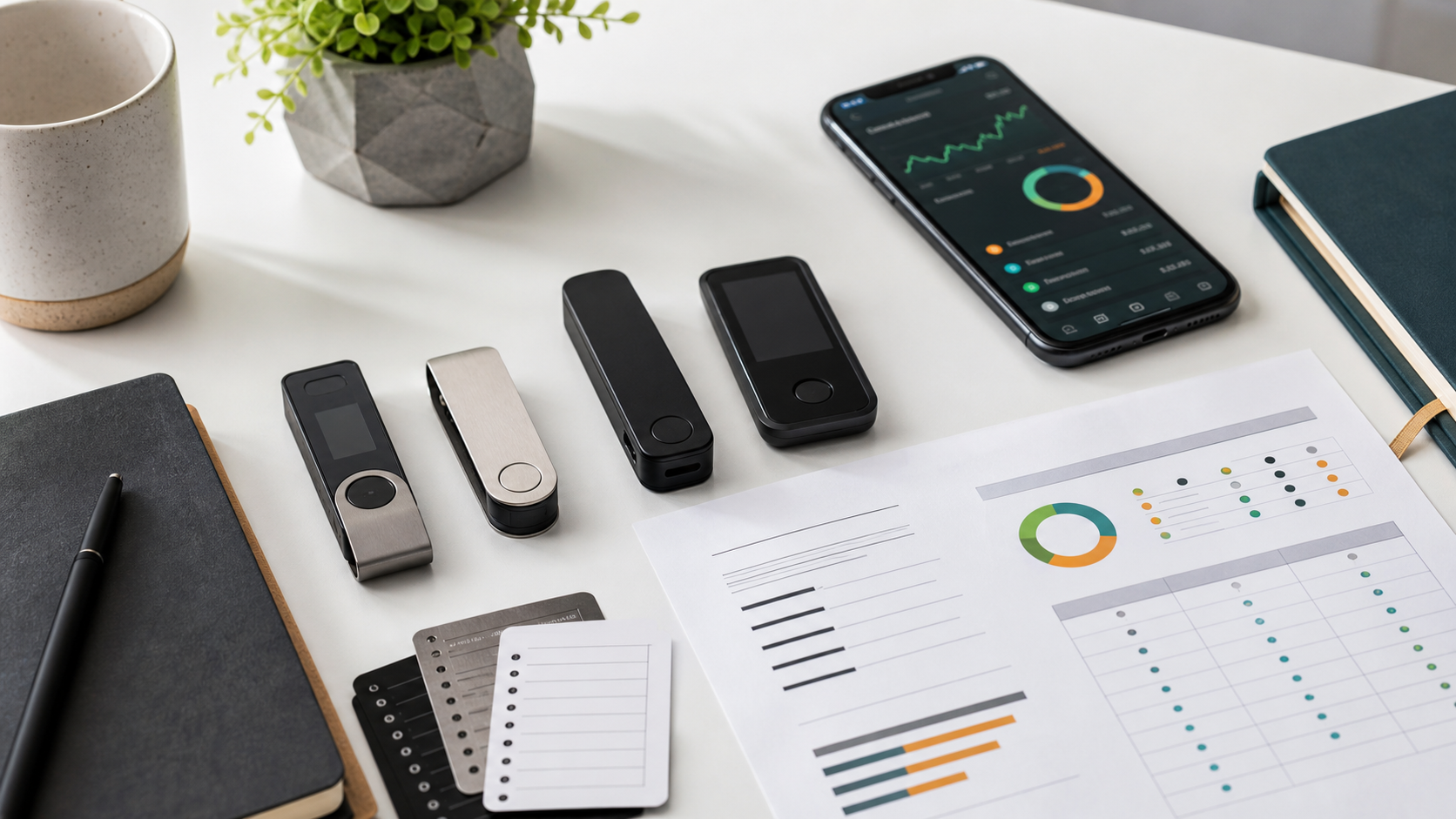
Across supplied localized official pages, Ledger lists Ledger Stax, Ledger Flex, Ledger Nano Gen5, and Ledger Nano Classics among its signers or devices. The supplied captures also show model-linked screen descriptions: Ledger Stax with a 3.7-inch curved screen, Ledger Flex with a 2.8-inch Gorilla Glass screen, Ledger Nano Gen5 with a 2.8-inch lightweight or slim screen, and Ledger Nano Classics with a 1.1-inch screen. Citation examples: Ledger English homepage, Ledger German homepage, Ledger French homepage, and Ledger Turkish homepage.
Ledger also states on the supplied official pages that users can manage 15,000+ crypto assets, with examples including Bitcoin, Ethereum, Solana, XRP, and stablecoins. The supplied captures further say the app supports diversification across more than 90 chains and compares prices across more than 50 providers. These are official-page claims and should be confirmed against live product pages before publishing.
What This Means for Hardware Wallet Users
For current hardware wallet users, the most practical takeaway is not the marketing language around an app upgrade, but the security hygiene reminder repeated in the supplied sources: Ledger says it will never ask for the 24 words of a recovery phrase and warns users never to share them. That warning is relevant regardless of which hardware wallet or software interface a user relies on.
The supplied source material also repeats a general hardware-wallet security model: hardware wallets store private keys offline, and non-custodial wallets let users control their crypto. However, the capture has important limits. It does not provide enough visible text to confirm per-model connection methods, prices, open-source status, release years, or specific Secure Element certification levels. Editors should avoid adding those claims unless verified from separate product-bound evidence.
What You Should Do Right Now
- Treat any request for your recovery phrase as hostile. Ledger’s supplied official pages say it will never ask for the 24 words of a recovery phrase.
- Before updating or installing wallet software, verify the download path from the official source you intend to use. Do not follow unsolicited links from messages, ads, or social posts.
- Review transaction details on your hardware wallet screen before signing. Do not approve transactions you do not understand.
- Confirm asset and chain support directly before moving funds. The supplied Ledger pages claim 15,000+ crypto assets and more than 90 chains in the app context, but individual asset support can vary by product, app version, region, and third-party provider.
- Keep recovery materials offline and private. Do not type seed words into websites, chats, forms, cloud notes, screenshots, or support tickets.
- For CMS publication, verify any product-specific details that are not present in the supplied capture, including connection methods, pricing, certifications, firmware details, and release dates.
Which Wallets Are Affected / Unaffected
No exploit, breach, forced migration, or affected wallet list is confirmed in the supplied job context. This article should therefore not describe any device as affected or unaffected by a security incident.
The supplied sources discuss Ledger’s broader wallet app and signer lineup, including Ledger Stax, Ledger Flex, Ledger Nano Gen5, and Ledger Nano Classics. They do not provide enough visible evidence to assign USB, Bluetooth, NFC, QR, or other connection methods to specific Ledger models. Do not infer connection security from registry notes or from unrelated wallet product data.
Air-gapped wallets were not affected due to their zero-wireless architecture.
Background: Why This Matters
Wallet apps are the interface most users see when they buy, swap, stake, track balances, or interact with Web3 services. Hardware wallets are designed to keep private keys offline while signing transactions, but users can still be exposed to phishing, malicious links, misleading approval prompts, and fake support messages. That is why the recovery phrase warning is central: if an attacker gets the recovery phrase, the hardware device itself may no longer protect the funds.
Source Links
Related
Related: Hardware wallet comparison page | Hardware wallet recovery phrase FAQ