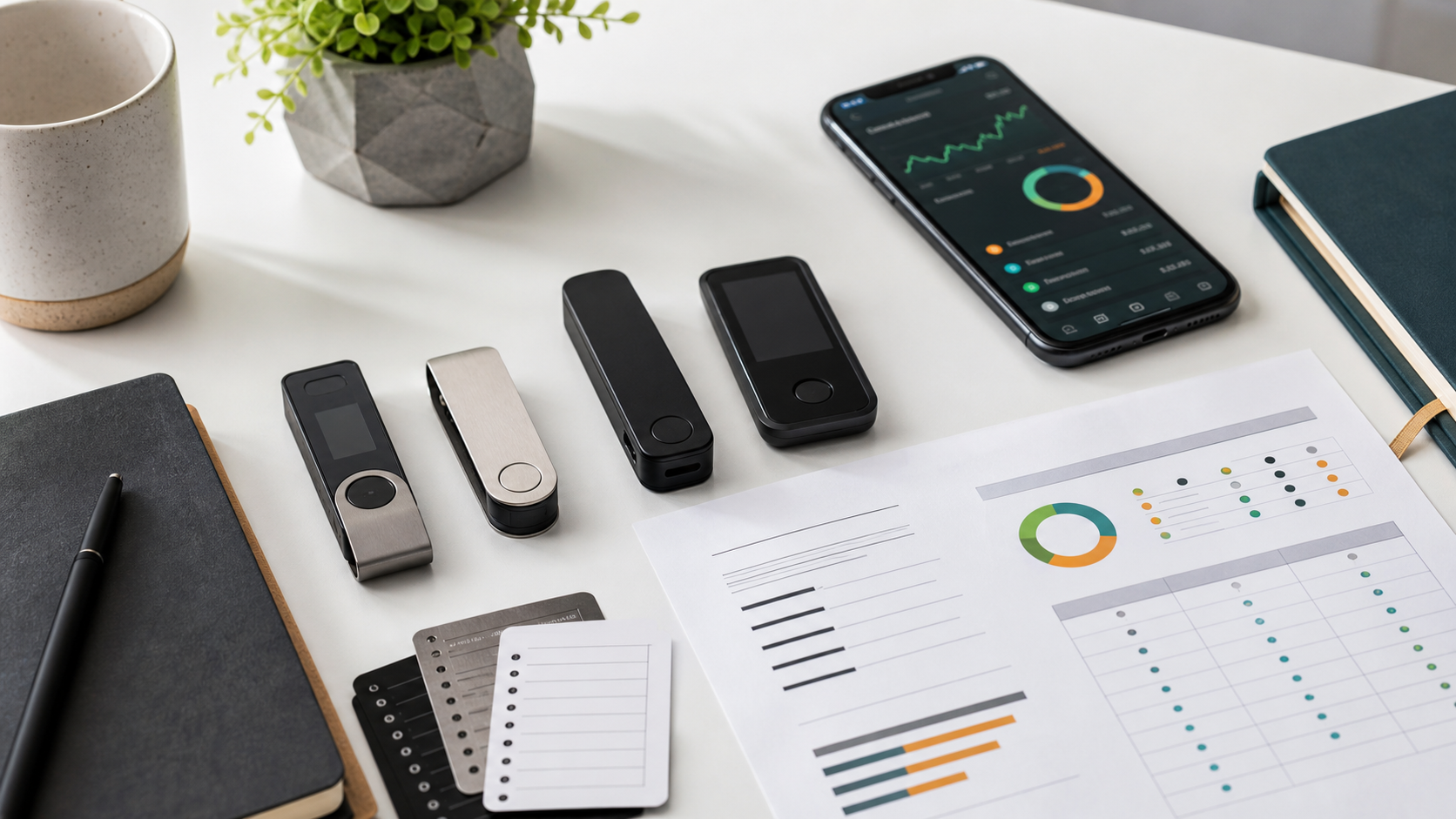
Hardware Wallet FAQ: Secure Elements, Cold Wallet Timing, and Mobile-Friendly Self-Custody
FAQ 1: Do secure elements matter in a hardware wallet?
Secure elements can matter in a hardware wallet, but they are only one part of the security decision. A beginner should not treat the presence or absence of a secure element as the only test of whether a wallet is safe enough.
The supplied source set includes a discovery candidate where a beginner says they are learning self-custody and are confused by discussions about secure elements, open-source design, backups, and seed phrase storage. That source is useful because it reflects a common user question, not because it proves any product claim. A hardware wallet also needs a clear recovery model, a signing workflow the owner understands, and a backup process that does not expose the seed phrase.
For practical evaluation, compare wallet categories by asking: Does the device keep signing separate from an internet-connected phone or computer? Does the user understand the recovery phrase process? Is the backup stored offline and protected from loss, theft, and damage? Are secure-element details current and verifiable from official documentation?
Final recommendation: use secure element claims as a verification checkpoint, then read the internal guide on seed phrase backup and self-custody setup before choosing a device category.
“json“
FAQ 2: When is it worth buying a cold wallet?
A cold wallet becomes worth considering when the value, holding period, or personal risk of exchange custody feels significant enough to justify the device cost and recovery responsibility. There is no supplied verified threshold that says a user must buy at a specific portfolio size.
Several supplied discovery candidates show users asking whether a hardware wallet is worth it for a small amount, when to move from an exchange, and whether a lower-cost cold wallet is enough for a beginner. These are audience signals only. They should not be treated as evidence that one price band or device category is best. The main trade-off is control versus responsibility: exchange custody reduces self-management burden but depends on a third party, while self-custody removes that custodian but makes backup loss and transaction mistakes the user’s problem.
For a small portfolio, the most important question may be whether the user can safely store a seed phrase and follow recovery instructions. For a long-term holder or larger portfolio, a dedicated signing device may become more attractive, but only if the owner can protect the recovery material.
Final recommendation: start with an internal cold wallet buying checklist that compares custody risk, device cost, recovery confidence, and long-term holding plans.
“json“
FAQ 3: Is a cold wallet practical for mobile users and travel?
A cold wallet can be practical for mobile users if its signing method and companion app match the user’s phone, travel habits, and asset needs. Mobile convenience should be verified before purchase rather than assumed from the phrase “hardware wallet” or “cold wallet.”
The supplied source set includes discovery candidates about iPhone compatibility and travel-friendly cold wallet use. Those sources show the questions users are asking, but they do not verify current compatibility for any product. In the supplied wallet facts, one air-gapped touchscreen hardware wallet category uses a QR signing workflow and mobile app support, while one card hardware wallet category uses NFC card signing and mobile app support. Both categories are listed with seed phrase backup. Those facts must still be checked against current official product pages before publication.
For travel, the practical issues are different from long-term storage at home. A traveler may care about cable-free operation, phone compatibility, physical loss risk, and whether they should carry the signing device at all. A long-term holder may prefer fewer transactions and stronger backup discipline over daily convenience.
Final recommendation: choose a category only after verifying current mobile app support, supported assets, recovery model, and signing workflow from official documentation.
“json“
Product data checkpoints from supplied wallet facts
These are not recommendations, rankings, or verified review conclusions. They are supplied CMS wallet facts that need editorial verification before publication.
| Supplied wallet entry | Category | Signing / connectivity | Recovery model | Supplied support notes | Verification checkpoint |
|---|---|---|---|---|---|
| ELLIPAL Titan 2.0 | Air-gapped touchscreen hardware wallet | Air-gapped QR signing workflow | Seed phrase backup | Mobile app support listed; desktop app support not listed; BTC, ETH, XRP, SOL, EVM listed | Verify current secure-element details, asset support, app support, firmware status, and price band before publishing |
| ELLIPAL X Card | NFC card hardware wallet | NFC card signing with mobile app | Seed phrase backup | Mobile app support listed; desktop app support not listed; BTC, ETH, XRP, SOL, EVM listed | Verify current secure-element details, asset support, app support, recovery flow, and availability before publishing |
Editorial limitations
- The source synthesis brief states that these materials came from search-tool discovery.
- The supplied source materials should not be treated as standalone proof of product claims.
- The supplied source materials should not be treated as verified hands-on reviews, security audits, rankings, or endorsements.
- Two off-topic or low-relevance wallet-word candidates were present in the source set; do not use them as crypto hardware wallet evidence.
Internal linking suggestions
- Link to a seed phrase backup guide.
- Link to a hot wallet vs cold wallet explainer.
- Link to a hardware wallet buying checklist.
- Link to a mobile hardware wallet setup checklist.