What Is an NFC Hardware Wallet? A Plain-English Guide to Tap-to-Sign Crypto Storage
The Quick Answer
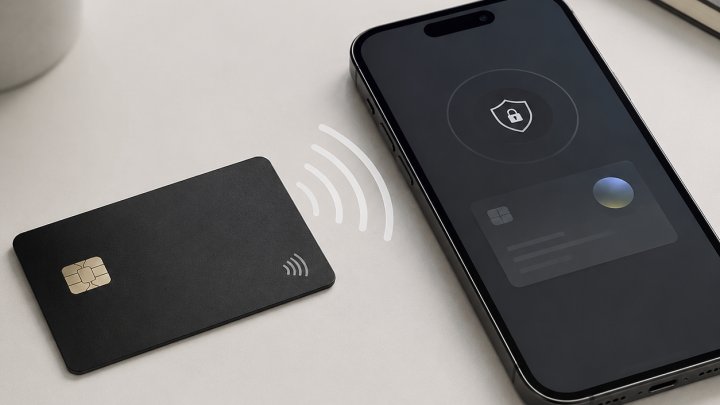
An NFC hardware wallet is a crypto hardware wallet that communicates with a phone through near-field communication, the same short-range tap technology many people already use for contactless cards. In the supplied Tangem material, Tangem says its hardware wallet is powered by a phone’s NFC module, needs no batteries or cables, and is used by tapping the card to a phone.
The important idea is not “tap equals safe.” The important idea is that the wallet is meant to keep private-key operations inside a separate physical device while your phone acts as the interface.
What This Actually Means, Without Jargon
Think of a hardware wallet like a house key that never needs to be copied into your email, notes app, or exchange account. Your phone can show you the door, the address, and the action you want to take, but the key itself stays in a separate object.
With an NFC wallet, that separate object is often card-like. Instead of plugging it in with USB or pairing it with another wireless method, you bring it close to your phone. The phone’s NFC module provides the short-range communication needed for the wallet action.
Tangem’s official pages describe this model in simple terms: the hardware wallet is powered by the phone’s NFC module, with “no batteries, no cables, nothing to charge” (Tangem English source). The German, French, and Spanish pages repeat the same general idea: the wallet works through the phone’s NFC module and does not require batteries or charging cables (German source, French source, Spanish source).
The technical term is near-field communication, or NFC. It is designed for very short-range interactions. In the hardware-wallet context, NFC is not the same as storing your crypto “on your phone.” The phone is still the screen and app interface; the hardware wallet is the separate signing device.
Why It Matters for Your Crypto
Crypto ownership depends on who controls the keys. A custodial exchange account may feel like an ordinary online account, but the exchange usually controls the infrastructure around withdrawals and access. A non-custodial wallet changes that relationship: the user is responsible for the key material and the recovery path.
Tangem says its cold wallet is fully non-custodial and that no company, bank, or government can access, freeze, or restrict assets held with the wallet (Tangem English source). That is a manufacturer description of the custody model, and it captures the broader self-custody idea: if you hold the keys, you also hold more of the responsibility.
An NFC hardware wallet matters because it tries to reduce friction. If using a wallet feels too hard, people may leave funds on exchanges, reuse unsafe backups, or sign transactions without understanding what they are doing. Tangem says its wallet can be activated in two minutes and managed with a tap. That kind of usability claim is worth noting because ease of use can affect real security behavior.
But convenience does not remove risk. You still need to understand:
- what you are approving before you tap;
- how recovery works if a card is lost or damaged;
- whether the wallet supports the assets and networks you actually use;
- what evidence supports any security or durability statement;
- whether the app, device, and backup model match your threat level.
Tangem says users can manage over 14,100 assets across more than 90 networks (Tangem English source). Treat that as an aggregate support statement, not a substitute for checking a specific coin, token, network, or wallet feature before moving funds.
The Common Misconception
Many people think a hardware wallet is automatically safe because it is physical. In fact, a hardware wallet is only one part of a self-custody setup.
The device can help keep key operations away from general-purpose internet-connected devices, but it cannot make you read transaction details, avoid phishing links, protect every backup, or choose the correct receiving network. If you approve the wrong action, send funds to the wrong address, or lose your recovery method, the fact that a device is “hardware” may not save you.
Another misconception is that a tap-based wallet must either be unsafe because it communicates with a phone, or perfectly safe because it is separate from the phone. The more accurate view is in the middle. NFC is a communication method. The security question is how the wallet generates, stores, and uses keys; how the app displays approvals; how recovery is handled; and what evidence exists for the manufacturer’s statements.
For example, Tangem says each wallet contains a certified microchip developed with Samsung Semiconductors and that the chip is EAL6+ certified with protection against invasive and non-invasive attacks (Tangem English source). That is relevant evidence, but it should not be stretched into “unhackable” or “no device can ever fail.”
How It Works: The Technical Part, Simplified
Here is a simplified view of how an NFC hardware wallet flow typically works, using only the concepts supported by the supplied material:
- The app prepares the action. You open the wallet app on your phone and choose an action such as viewing balances, sending crypto, swapping, or changing wallet settings. Tangem says its app can support actions such as storing, buying, earning, sending, swapping, and spending tokens through its ecosystem pages.
- The phone communicates with the card by NFC. The card is brought close to the phone. Tangem states that its hardware wallet is powered by the phone’s NFC module and does not need batteries or cables.
- The hardware wallet handles the key operation. Tangem says its secure element generates a private key using entropy from physical sensors, and that keys are stored inside chips. The supplied evidence also says cards can connect with end-to-end encryption when transferring the key between cards.
- The user approves the intended action. The phone interface is where the user sees what is being requested. This is the moment where careful checking matters: destination address, network, token, and amount should match what you intend.
- The signed transaction is sent onward. After approval, the app can broadcast or pass along the signed transaction. Tangem says its hardware wallet is fully autonomous and does not involve Tangem servers in crypto transactions.
- Recovery depends on the wallet’s backup model. Tangem says backups replace the traditional 12-word recovery seed, while a seed phrase remains optional for advanced users. That is a meaningful design difference from traditional seed-first wallets, and users should understand it before relying on it.
What You Should Do With This Information
If you are considering any NFC hardware wallet category, start with your own use case rather than a product checklist.
Ask these questions before moving meaningful funds:
- Do I understand exactly how recovery works?
- If the device is lost, damaged, or unavailable, what restores access?
- Does the wallet support the exact assets and networks I plan to use?
- Does the approval screen or app flow help me catch mistakes?
- What security statements come from the manufacturer, and what has outside review?
- Am I comfortable with a card-based tap model rather than a cable-based or screen-based model?
For a first test, use a small amount. Practice receiving, sending, and recovering access according to the wallet’s instructions before relying on it for larger balances. Keep your backup method private, offline where appropriate, and separate from devices or accounts that could be compromised together.
Frequently Asked Questions
What is an NFC hardware wallet?
An NFC hardware wallet is a physical crypto wallet that communicates with a phone using near-field communication. In the supplied Tangem materials, the wallet is described as powered by the phone’s NFC module and used by tapping the card to the phone.
Does NFC mean my crypto is stored on my phone?
No. NFC is the communication method between the phone and the hardware wallet. The phone can act as the interface, while the hardware wallet is intended to handle key-related operations separately.
Is an NFC hardware wallet automatically safer than every other wallet type?
Not automatically. NFC can make a wallet easier to use, but security also depends on key generation, key storage, recovery design, app behavior, user verification, and the quality of the device implementation.
What should I check before using a tap-to-sign wallet?
Check the recovery model, supported assets and networks, security evidence, app permissions, transaction-review flow, and how you would restore access if the device or backup cards were lost.